
The Mad Surgeon Who Loved Dictionaries and Shot a Man
Category: Curious Crimes 11th July 2026
A peculiar, terribly English mixture took place when an American army surgeon living in Lambeth opened fire on a man called George Merrett and thereby rearranged his life into a spectacle that the law had to examine rather more closely than anyone wished.
William Chester Minor was, on the face of it, a dashing if troubled figure. A trained surgeon who had seen war, he became convinced that enemies, spies and rogues haunted his rooms. One evening his alarmed temper produced a pistol. A man was shot. The man died. The city was suitably outraged. The courts were politely flummoxed.
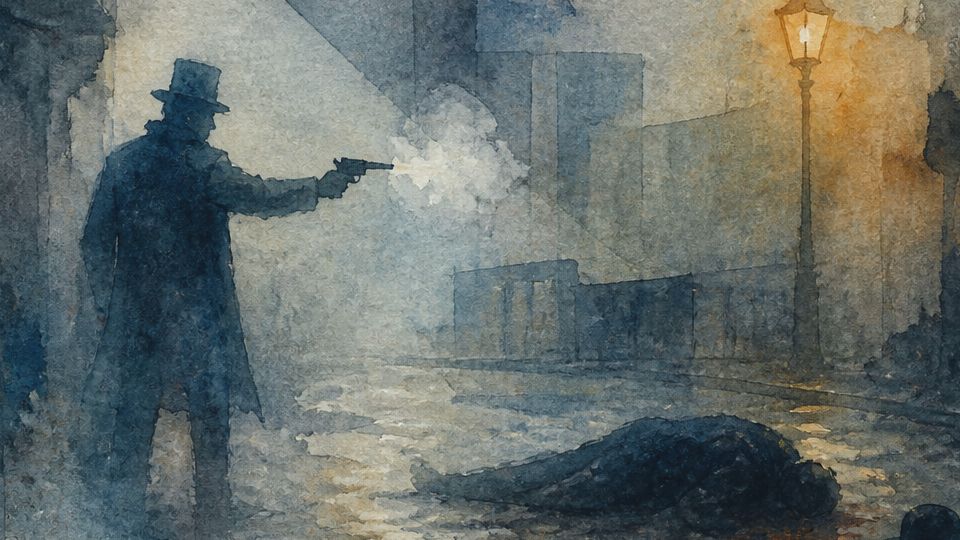
The trial that followed showed the law behaving like an overworked but obliging valet. Evidence of Minor's mental collapse was placed before magistrates. The verdict placed him into an asylum rather than a gaol. Broadmoor became his residence, a rather splendid institution of containment where he was cared for at public expense and required to behave like a guest who had damaged the silver.
And then the story became odder. While confined, Minor developed a scholarly devotion to the new Oxford dictionary project. Letters, slips of paper, quotations and notes flowed from his cell into the hands of James Murray and the editorial team. A man who had been judged beastly and preposterous by his neighbours turned into an indispensable research correspondent. The very same hand that had fired a fatal shot supplied a treasure trove of living language to lexicographers.
There is a comic cruelty in the arrangement. The law locked him up because he was dangerous. The scholarly world sent him books and questions because he was useful. The public, which loves a neat moral, found the whole affair hard to file away in its little labelled drawers.
Minor remained under care for many years and kept sending in citations that helped build the dictionary. The scene is both tragic and oddly splendid. It leaves one feeling, in a manner that might seem rather distant and yet oddly intimate, that human life will arrange itself into curiosities if given half a chance.