
The Baxter Faro That Ate the Tenner
Category: Gambling Hells 18th July 2026
Curiously modest in appearance, the room on a side street near Holborn had the decency to pretend at discretion. It did this with a shaded gaslight, a battered card table and a small notice that read in an attempt at tastefulness: 'Private Club'. In practice the place was a very plain sort of confidence trick in a waistcoat. William Baxter kept it. He was a neatman. Dashing enough to be trusted. Terribly good at smiling in the exact half-second before your coin left your palm.
Baxter's establishment ran a faro bank, a game that, to the uninitiated, looks like a polite mathematical atrocity. Patrons came from three strata: tradesmen who fancied themselves as men of the world, clerks with trousers slightly too new, and one or two gentlemen whose coats had the strange habit of hiding very large pockets. Conversation was sprightly, repartee snappy, and the air smelled faintly of stale tobacco and hopes.
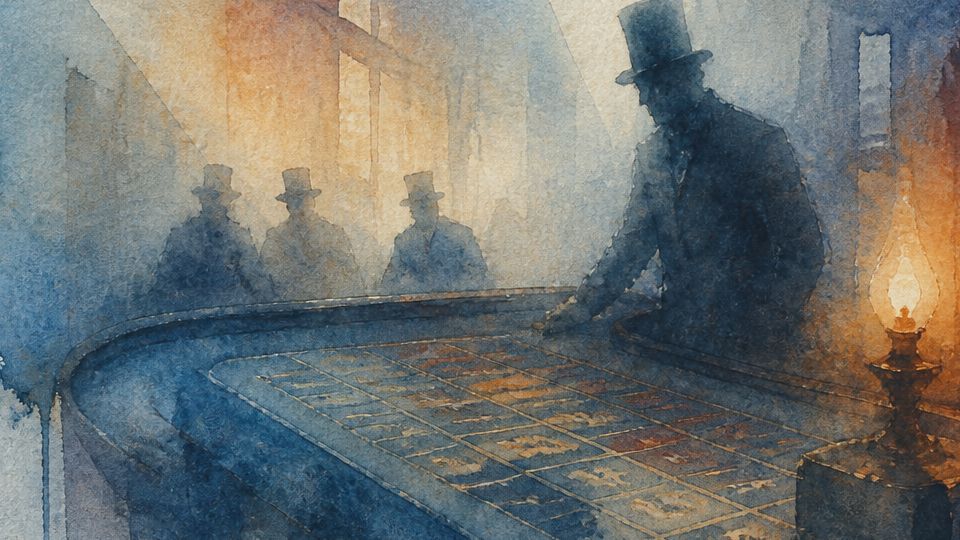
The law arrived because a magistrate received complaints from a couple of respectable types who had lost their temper and everything else. Officers discovered that Baxter's receipts were a house of cards in more senses than one. Evidence showed staking sheets, a hired croupier and a roster of regulars. Baxter was charged with keeping a gaming house under the statutes that make respectable citizens feel as if civilisation will be destroyed by a pair of knaves and a deck of cards.
In court the case felt absurd and perfectly bureaucratic. Witnesses gave accounts with the particular zeal of people explaining why they had been silly. The magistrate read the statute aloud as if it were a recipe. Baxter, who had the pallor of a man who had been counting other people's coin until he thought it was his, pleaded to the better angels of mercy and to several technicalities in the ledger. The verdict found him guilty. Sentence was a fine and short gaol time. It was designed to look firm while remaining intimate enough to allow everyone to keep their social standing intact.
The whole affair left an atmosphere of relieved propriety. The men who had lost coin returned to betting on gentlemen's contests and horse races and then, after yonks, some of them drifted back. Life, being properly human, erred and then tidied itself with the faintest possible apology. Baxter vanished from the newspapers but not from memory. For those who witnessed it, his little bank remained an instructive demonstration: civility and greed are practised in the same rooms, often separated only by a neat card and a mannered smile.