
The Mersey That Spat Up a Man Nobody Could Name
Category: River Rat Crimes 25th July 2026
There are mornings when the river behaves like a sulky giant and gives up its sins. One January morning in 1876 the Mersey rolled a body into the foreshore and Liverpool found itself in the peculiar business of identifying a man who had no papers, no friends at the quay, and a face the press described with the polite boredom of people who expect mischief.
He was pulled out near the George's Dock. Ragged coat, boots worn like old coins, a ring on one finger that meant little, and a head that had taken a tidy bashing. The coroner's inquest called him "a man apparently of thirty to forty years." The dockworkers, who tell truths with fewer words, said he looked like he had been sleeping rough. They also said he smelled of ale and coal, which in Liverpool is practically a birthright.
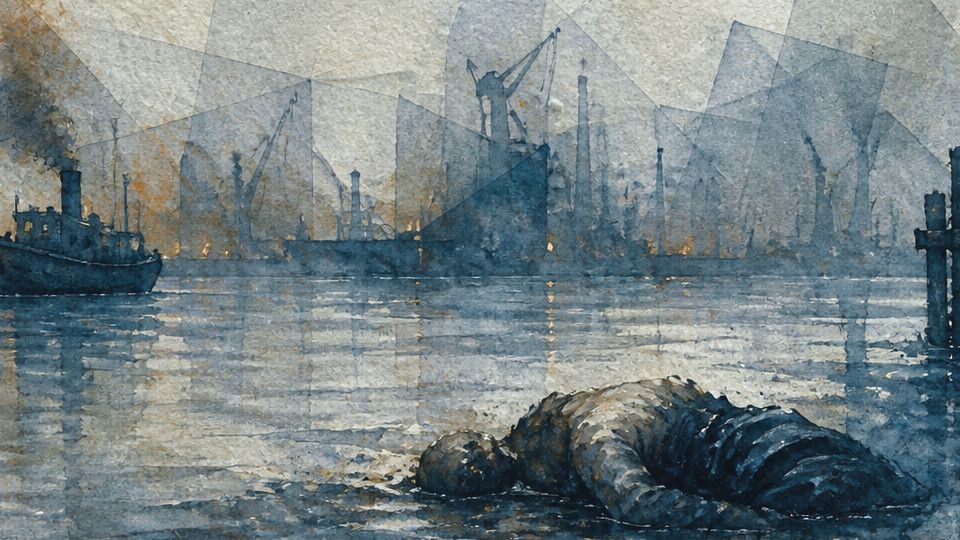
There was immediate suspicion of foul play because the injuries were not consistent with a slip. Barge-rope marks and bruises suggested a scuffle. The police interviewed captains, lightermen and scullers. A bargeman recalled seeing a quarrel on a lighter three nights earlier. A cabin boy remembered an argument about money. The seam of the story held together like wet paper, but the witnesses mattered because the docks were where secrets went to breathe.
Newspapers ran with the mystery. One called it a cautionary tale. Another treated it like a melodrama starring a man called No-Name. Magistrates used the inquest to lecture about drunkenness and the perils of sleeping by the tide. The dockmen, who knew where truth and rum met, snorted and returned to work. The coroner recorded a verdict of "wilful murder by some person or persons unknown." Which, legally, removes the river as suspect and places the blame on the comfortable fact of anonymity.
There was no capture. Leads dried faster than a wash in a gale. A month became two. The ring was declared worthless. A sketch of the corpse was published and still returned no recognition. Inquests like this often end with a heap of questions and a receipt for silence. The city had a dead man it could not name and an entire waterfront that had to keep its own counsel.
Liverpool swallowed the story and moved on, as port towns must. The men at the wharf, the ones who load coal and spit jokes, carried the memory in the same locked place where they keep superstition and grudges. They muttered the occasional remark in the years after, usually when someone was missing a shift or a hat. The Mersey, patient and savage, continued to cough up oddities and keep the rest. A proper mystery. No verdict that sticks. Just another man turned anonymous by the tide.