
the bargeman who lied to the river
Category: River Rat Crimes 29th July 2026
There is a sort of quiet criminality that lives on the water where doors are wet, gloves smell of tar, and people tell the truth like they owe it rent. I stumbled into this case years ago while poking through dry court transcripts because insomnia and bad hobbies are my brand now. It was small. It was filthy. It was properly Victorian.
In 1887 Thomas Wright worked the south London docks. He handled ropes, cursed at tides, and knew how to make a barge do what it was told. One night a fellow bargeman, William Cooper, turned up missing. People whispered. Barges carry cargo, gossip, and sometimes bones. The papers did their usual quiet panic about prowling strangers. The cops did what they could with a constable, a notebook, and a willingness to ask awkward questions.
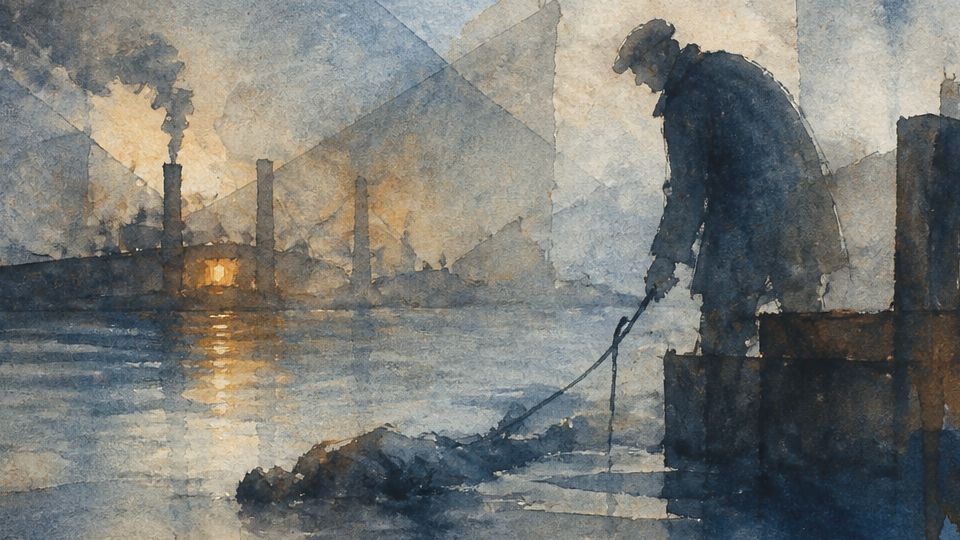
Wright lied. No cap. He lied easy and fast, which in his line is a skill more than a crime until it becomes both. His story was tidy: Cooper took off, owed money, and would be back when tides turned. Only the tide returned a wet coat and a pair of boots that did not belong to anyone respectable. The river spat up Cooper's remnants near Rotherhithe. When a man is found in the Thames, the river insists on being the loudest witness.
Evidence in the case was lowlight TV. A neighbour's testimony about shouting. A ledger that had Cooper's name scratched out. A barkeep who remembered a row, and a witness who said Wright had been unusually amped that week, as if guap had appeared in his pockets overnight. The defence tried basic excuses. They were basic. Everyone could smell the cheugy attempts at reasonable doubt. The jury, bless them, took the river's mood seriously.
In court Wright flexed a weird confidence that read like mug energy. He tried to clap back with an alibi that was stretched thin, and the cross-examination warmed into something sharp. The coroner's surgeon testified about injuries that did not match an accidental fall. That, paired with Wright's dodgy ledger entries and the boots, did the job. He was convicted of manslaughter - this was the W of the law they could get - and sentenced to a decade, which felt like a heavy L for Cooper, whose story was over and over by then.
People loved the river for its romance, until the river decided to be a bit of a snitch. In Victorian London the docks were a neighbourhood and a jury room and a confessional all at once. This case is small and a little gnarly. It is also a reminder that the Thames kept receipts. And sometimes it handed them to the court, dripping and perfectly inconvenient. Bet on the river, people. It holds grudges. Periodt.