
The Poacher Who Went Too Far (and Felt Proper Stupid)
Category: Poachers Moon 23rd June 2026
Moonlight makes men braver. Especially the sort who sneak across moorland with dogs and knives, whispering like thieves and thinking themselves clever. In 1872 a band of men prowled a Yorkshire estate in that way, hopeful for grouse and ashamed of the mud on their boots. They were mucky, black bright from the peat, and they did it all for a bit of brass to feed bairns and wives. That felt true to life then and it is still true today.
The keeper on the estate, a steady fellow who had worked the ground for years and knew every ginnel and drainage ditch, confronted them. He was doing his job, which is to say he stood where he was told to stand and kept watch. The meeting ended badly when a shot rang out and the keeper fell. Men scattered into the dark like spuggies. The law arrived and hunted for the men through hedgerow and lane, following footprints and whispering farm gossip, which in those parts is as useful as any detective.
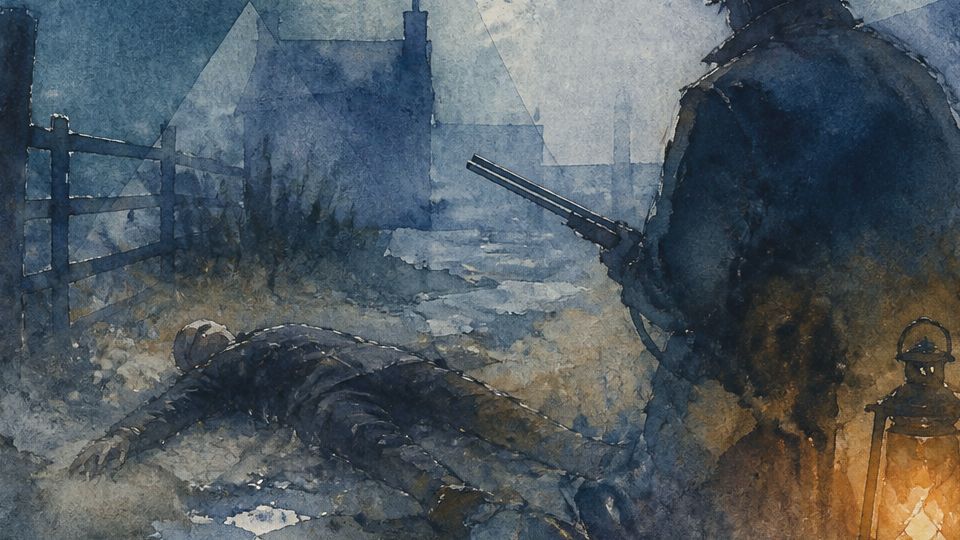
One man, Thomas Hargreaves, was held. He was rough at the edges but not daft. He had been seen near the place and the story stuck to him like mud to a boot. In court he tried to tidy the mess up with words and excuses. The jury, a grouchy little jury with kettles and butties on their minds, listened. The evidence was the sort that cannot be leant on too heavily: witness accounts, the gun, a trail through a ginnel, a shirt stained in a fashion no one wanted to explain.
There was a taste for drama in the courtroom. People loved a simple line between right and wrong. Hargreaves swore he had been elsewhere. The bench, meanwhile, smelled of damp coats and tobacco. The magistrate, who had the look of someone who had faced shepherds and tramps and worse, read the verdict with the slow joy of a man closing a heavy book. Hargreaves left the dock changed, his pride gone and his future pinched.
Poaching is petty in daylight and dangerous at night. It turns a hungry man into a gambler. It makes good folk mean, and it makes bad decisions worse. In the years after that shooting people used the tale as a scarlet warning. If ever I had to tell a bairn about choices, I would tell them of a moor, a keeper, and a shot in the dark. That tends to make them gi'or, straighten up, and mind their own business.