
The Skeleton Army That Tore Up Worthing
Category: Brawls & Affrays 6th July 2026
Worthing in the 1880s felt like a picture postcard until a crowd turned up to do mischief and turned the promenade into a spectacle of pure daftness. The Skeleton Army were a ragged crew who loved to mock the Salvation Army parades. They sang out of tune. They laughed. They pelted people with rotten fruit. Eyup, they made a proper mess of a Sunday.
The row began small. Bands would march, women and men in plain dress would sing, and a knot of locals would gather in a ginnel or on the pier to see what trouble they could stir. It grew because folk kept showing up to see the show. A few lads with big voices and bad manners turned into a gang of several hundred. Magistrates then had to sort the chaos because the constables could do nowt on their own for long.
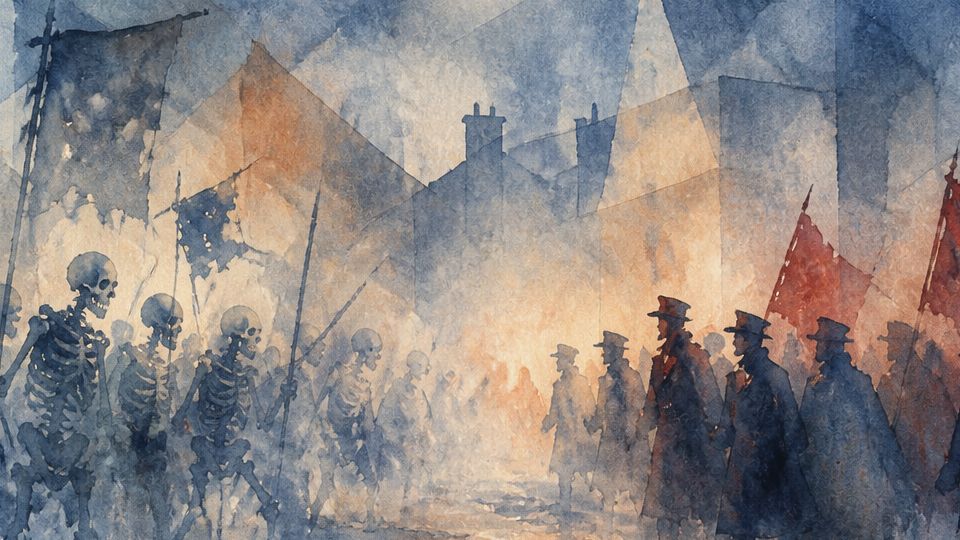
Reports from the time show arrests for riot and affray, and court sessions that read like a scrap-book of seaside follies. The defendants came across as barmpots who thought antagonism was a sport. Some went to gaol. Some were fined. The press enjoyed it. The town council tried to fettle the situation by banning marches, which pleased nobody at first and pleased half the town a bit later.
The odd detail makes the whole thing more human than heroic. A Salvationist who had been shouting hymns got a face full of muck. A shopkeeper brewed a cuppa for an exhausted constable and handed it over with a grunt. Children watched from doorways and were told to lig by their mothers. The adults took longer to learn.
There was theatre to it. The Skeleton Army mocked uniforms and mimicked marches. They were more theatre troupe than regiment. The courts were embarrassed. Gentlemen with wigs shuffling papers found themselves having to explain why a seaside scuffle had cost the borough so much fuss. It read like small-town fury carried to its absolute limits.
In the end the row dwindled because parades changed their routes, police kept a closer eye, and townsfolk decided the fuss was daft as a brush. Worthing returned to selling seaside chips and the occasional tonic. Still, when you walk past an old ginnel there is a faint echo of drums and of people who thought messing about on a Sunday was the highest art. Reight strange, and very human.