
Sam Bass's Big Springs Payday
Category: Iron Horse Heists 27th June 2026
September of 1877 produced a scene that any sensible railway clerk would describe as ghastly and rather upsetting. Sam Bass, a gambler turned outlaw who had been mooching around the American West like a disgruntled gentleman in ill-fitting pyjamas, arranged for a Union Pacific train to be detained near Big Springs, Nebraska. The aim was simple. The execution was oddly theatrical. The result was a very tidy haul of government payroll in newly minted gold.
Bass and an authorised small band of accomplices boarded the train. They targeted the car thought to contain the company's wages and walked away with about sixty thousand dollars in coin. Contemporary reports vary. The figure might sound fantastical yet the theft was conspicuous enough to provoke an immediate reward, shrill headlines, and a posse that behaved with the efficiency of three exhausted ushers trying to manage a very rude reception.
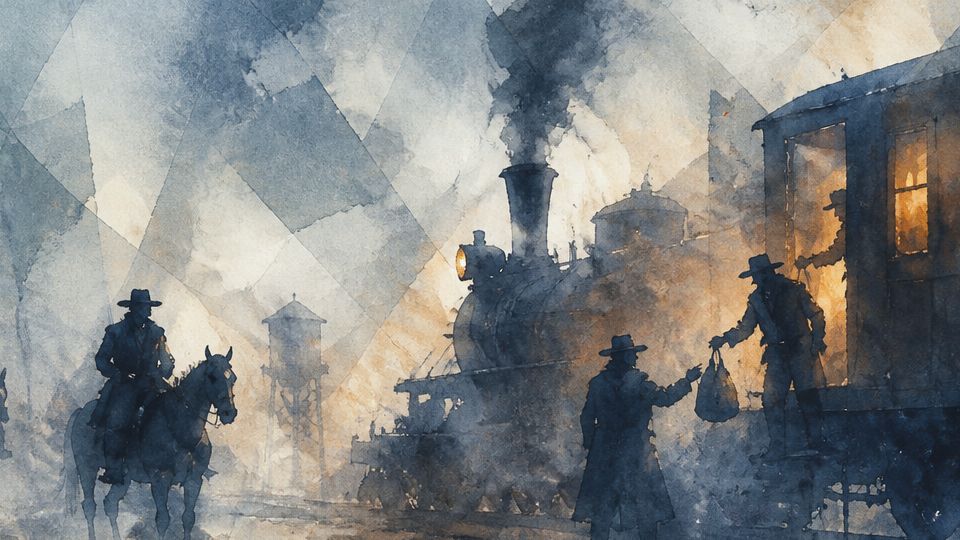
The robbery's charm, if one may use the word, lay in its commonplace absurdity. No elaborate tunnelling. No Dickensian riddle. Just a brash interruption, polite but firm threats, and the mechanical certainty of men who had decided their luck should be redistributed. The train company felt utterly humiliated. Local juries felt somewhat aggrieved. The press supplied repartee of a pugnacious nature. Folk who had been quietly saving for a winter coat discovered that fiscal prudence had acquired an astonishingly theatrical adversary.
Bass did not retire to live well. He rode east back towards Texas where a swift chain of local lawmen and enraged employers closed in. A shootout in Round Rock left him mortally wounded and his career concluded with the sort of tragicomic flourish that would please a playwright who delights in awkward finales. The money had already been dispersed or hidden. The thieves vanished into the wide country with varying amounts and varying degrees of conscience.
What remains, beyond the headline and the reward notices, is an oddly splendid reminder that the iron road offered opportunity to both the industrious and the thieving. The episode was terrible for the Union Pacific, terribly entertaining for the papers, and a fairly instructive caution to anyone who believes that ledgers and practice will always be safe from a determined, slightly theatrical grasp.