
How Norwich's Back-Alley Press Turned Real Money Into Party Tricks
Category: Devils Mint 16th June 2026
Eyup. In 1862 a snug, acky little workshop down a ginnel behind Norwich market became the sort of place magistrates dream about. Not because it brewed fine tea. Because it printed banknotes so convincing that shopkeepers handed over brass for them like they were proper. The tale is part detective yarn, part domestic farce, and I reckon it would make a rare warm un blush.
The local inspector, who was allus nosing about where other folks would leave nowt, clocked a pattern. A grocer took a note for a sack of sugar and later the bank called it bad. The notes were lovely. Too lovely. Signs pointed to a cack-handed operation, but clever enough to fool a gullible trader on a busy market day.
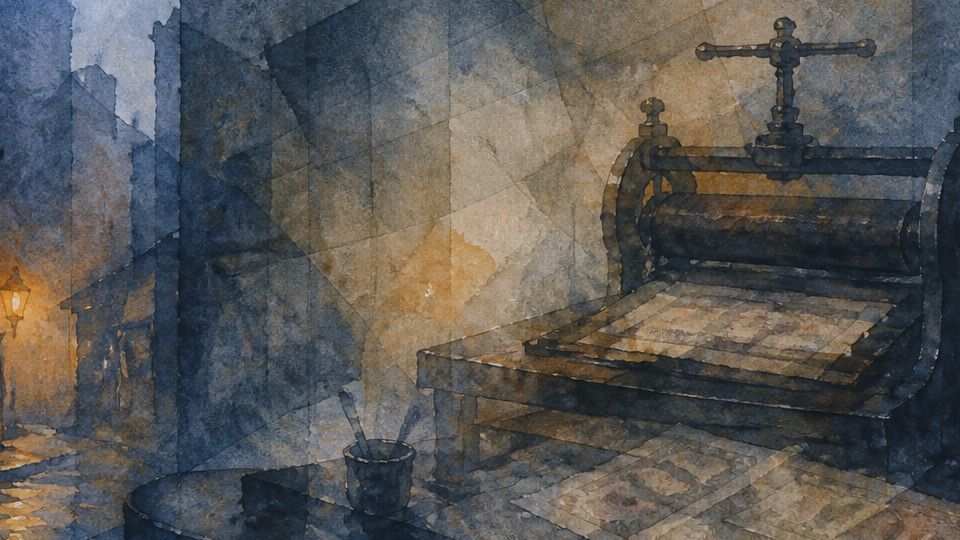
They found the press after a young bairn at the alley ran in with a packet of spice and a note that smelt faintly of oyle and ink. The housekeeper on the street had had her fettle done that morning and noticed a visitor who left the place looking black bright at the cuffs. That was the break. The team who raided the place expected a pile of tat. What they found was stone plates, engraved blocks and a ledger that proved the gang had been passing notes across Norfolk like confetti.
The accused were a mix of lithographer and bootmaker, an odd couple who had the kind of friendship where one makes designs and the other says "gizzit" when the money came in. They argued in court like two gents over a butty. One was plainly a dab on, sweating where he shouldn't. The other played calm and made the magistrates feel like they'd been gormless all along.
New tech mattered. Lithography let them copy flourishes and serials. That trick was cleverer than a fox in a pantry. Yet the gang slipped up on small things. Local customers remembered the paper, cheap stuff that felt wrong in the pocket. A single mistake and the whole racket slumped arse over tit.
The verdict sent two to prison and one packing off to labour. The press was destroyed, the plates burnt, and Norwich went back to buying tea with proper notes. Folks were chuffed. Shopkeepers breathed out. And the market? It got on with selling spice, which is where real civilisation begins.