
Madeleine Smith and the Case That Made Glasgow Huff
Category: Poisoners Shelf 3rd July 2026
Nobody in Victorian Glasgow expected romance to arrive with chemical stains on the napkin. Madeleine Smith, young, pretty and quietly wealthy, carried on a clandestine affair with Pierre Emile L'Angelier, a French clerk, and the relationship collapsed into scandal when he died in 1857 after a bout of violent sickness.
The papers adored the drama. Letters surfaced that hinted at quarrels and threats. There were rumours that arsenic had been bought and used. The police produced notes and scraps. The public, hungry for spectacle, treated the courtroom like a theatre. I was chuffed with the theatricality myself, even if the facts looked afeard and a bit cack-handed at times.
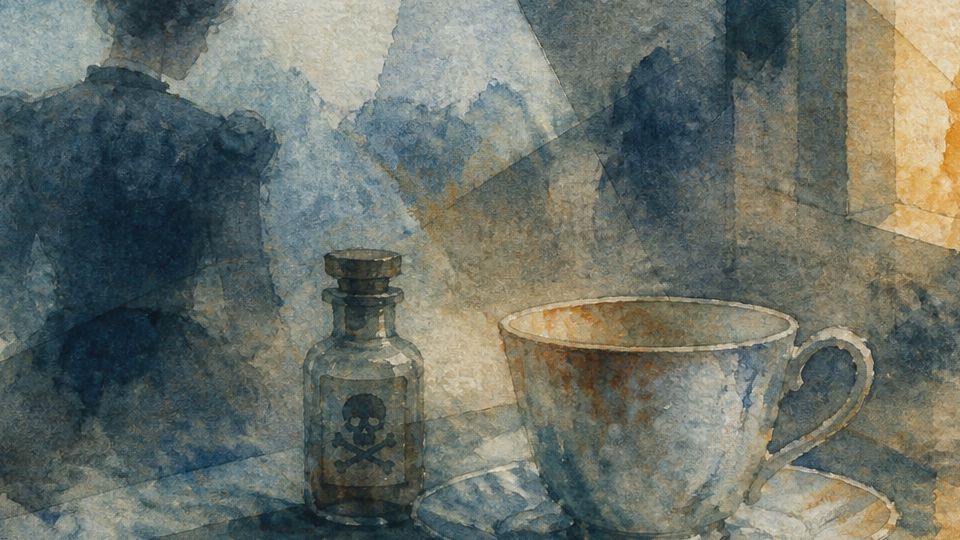
Prosecutors leaned on the correspondence as proof of motive. Defence counsel said love letters do not make a body into a chemical experiment. Expert testimony about poison and traces of arsenic was messy. Hard science in those days smelled of guesswork and hair analysis that made chemists look like amateurs trying to mend a watch with a spoon. It made folk gip and then cal and then gip again.
The jury returned an unusual verdict that has stayed famous. They said she was neither clearly guilty nor clearly innocent. The Scots had a verdict for that. It was called not proven. To a public wanting a tidy end and a single name to hate, that felt like someone slapping their hands and walking off. Madeleine left court a free woman and a social ruined one.
Later life revealed quiet exile and marriages away from prying eyes. People said she had been daft as a brush or else deliberately clever. The truth stayed tucked like a spare boot under a carriage seat. In the end the case sits like an unfinished engine you cannot quite restart. It taught a city to distrust letters, to treat chemistry with suspicion and to enjoy scandals with the same appetite as supper.
If the tale has a moral it is this. Love can be sticky. So can arsenic. And never, ever, ignore the smell at the bottom of a teacup.