
The Man Who Paid to Bury a Giant (and People Paid to Stare)
Category: Gilded Frauds 7th July 2026
Weirdly this whole thing reads like a festival prank that accidentally became an economy. In 1869 a ten foot "petrified man" turned up on a farm in Cardiff New York and the country lost its mind. George Hull, who sold cigars, had the idea, paid to have a giant carved from gypsum, then buried it where some laborers would find it and the press would run.
Hull was amped about the absurdity of it all. He wanted to make a point about belief and ended up running a cash business. People queued. They paid guap to gawk. Newspapers printed breathless columns. The scene was extra in the best possible way, like a carnival that had memorised Victorian seriousness and then winked.
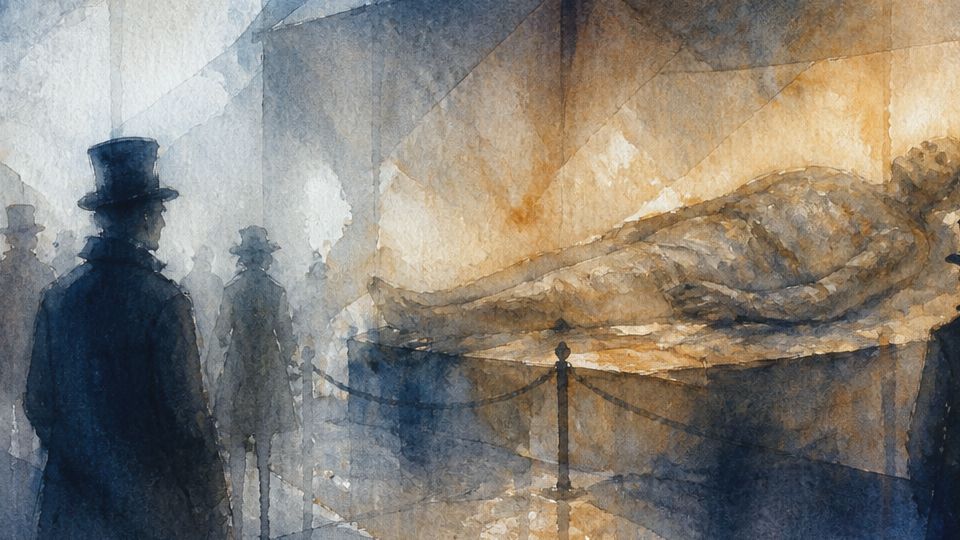
There was a bougie tier of spectators who treated the discovery like archaeology and a humbler crowd that came for the spectacle. Promoters turned the farm into a full experience and P T Barnum, who could smell attention, offered to buy the giant. When Barnum was refused he produced his own replica and issued a theatrical clap back to the original owners by showing a copy of the same nonsense.
For a while the public was happy to be duped. Dupe is the right word. People wanted to believe. The giant ghosted the idea of natural history and became pure show. Later investigators and some stonecutters traced odd tool marks and materials and the whole story unrav elled. Hull eventually admitted the hoax. The confession hit like an old meme being explained and I am dead.
What stays with me is how modern this all feels. Confidence schemes, slick presentation, clever placement, a bunch of people making bank off spectacle. It reads like influencer economy IRL but with shovels and plaster. The Cardiff Giant got sold, copied, litigated and toured until it ended up in museums. History calls it a hoax and everyone involved took a W and an L at once.
So if you ever feel cased by spectacle remember this: a tobacconist once turned foolery into fortune and taught a lot of people how to pay attention to the wrong thing, periodt.