
Florence Maybrick and the Sachet
Category: Poisoners Shelf 4th July 2026
Oddly, a teaspoon and a quiet cough turned into a full civic production. James Maybrick, a Liverpool merchant, fell ill in the late 1880s. Vomiting and stomach pains followed. The doctors produced curious symptoms and the coroner produced papers. Arsenic was found. The machinery of law started ticking with the sort of grim efficiency usually reserved for club committees and parish bazaars.
The prosecution argued that Florence Maybrick had administered arsenic. Evidence included traces in the body and testimony about medicines and powders. The defence insisted that James had taken various patent remedies and tonics, a concern which made ordinary people feel both learned and dangerously confident. The jury returned a guilty verdict at the Liverpool Assizes in 1889. The sentence was death. That sentence was later commuted to penal servitude for life following an outcry and much polite uproar in the press.
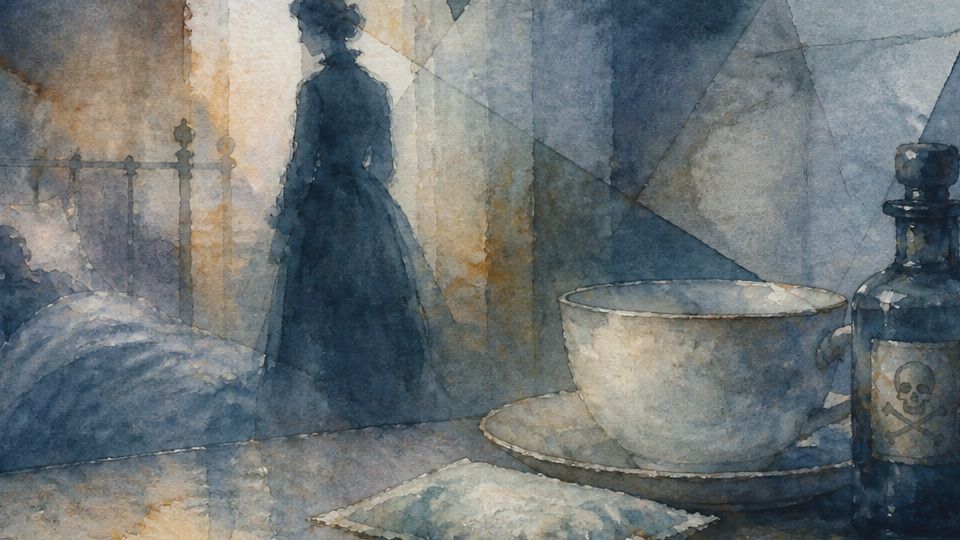
What remained was argument. Scientific technique in that age had reached an extraordinary height in one room and an abysmal muddle in the next. Analysts disagreed. Witnesses contradicted themselves with a zeal that made regular parish gossip seem spiffing. The case turned on motive, opportunity and tiny particles of powder that each side described with the fervour of sermon-givers. The public loved it. Friends fell silent. Neighbours became detectives. A household with a sofa and a napkin transformed into a miniature court of Europe.
The curious part comes after. Campaigns and petitions arose. Letters poured into officials. People who had been dull as dishwater suddenly discovered repartee and moral certainty. Newspapers pronounced with a glorious firmness. Some commentators found the whole affair absurd and some preferred to file it under stupendous scandal. The result was a legal compromise that satisfied no one while leaving everyone convinced they had been very nearly right.
The Maybrick affair survives as a lesson in brittle certainties. It shows how a small domestic tragedy can be inflated into a public drama. It leaves a trace of human frustration. It leaves behind questions about science, sex, money and taste. It leaves a story that, even today, seems fairly in a bind between fact and fancy.