
When the Fenians Tried to Make Trains Disappear (Almost)
Category: Steam Sabotage 6th July 2026
Inelegant politics met steam and iron and the result, for once, was not ceremonial. In the 1880s a ragged, international movement flirted with a new toy called dynamite and set its sights on the arteries of Victorian life. Trains and steamers, those splendid mechanical horses of commerce, were chosen because they moved people and made the establishment rather cross.
The idea was simple and maddeningly logical. Disable the moving machines that stitch an empire together and the empire will squirm. Emissaries carried packets, conspirators talked in basements, and the press smelled something delicious. There were explosions in streets and at stations, attempts to derail, and devices secreted on carriages and in luggage. The law reacted in that bureaucratic, pompous way it does, with magistrates producing lists, detectives producing reports, and newspapers producing shrieks of moral indignation that were, on inspection, rather entertaining.
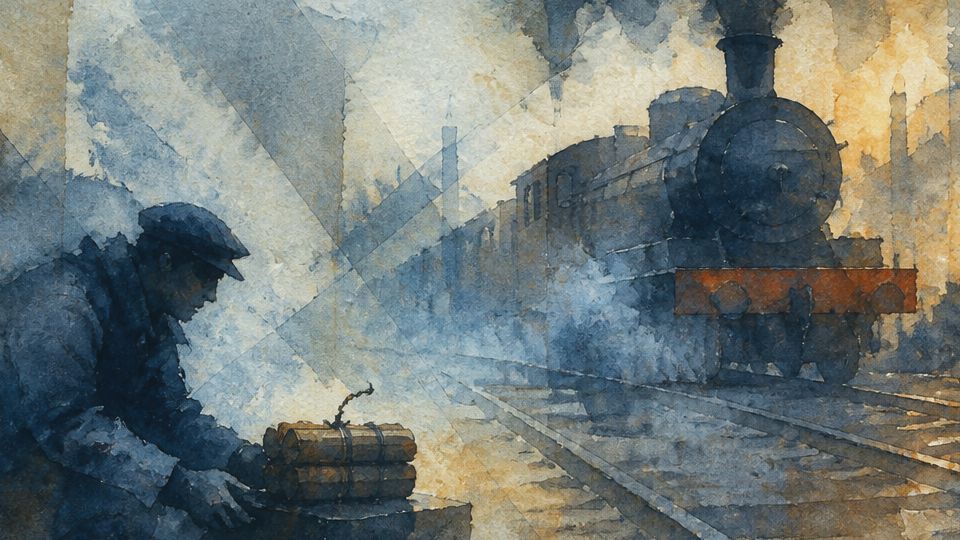
What makes this an especially rewarding Victorian case is the human comedy. There was bungling. There was a chap who left a device in a cloakroom. There was another who mailed a packet to a gentleman who then, bless him, opened it on his breakfast toast. There was professional politeness from judges and ferocious officiousness from the Home Office. The movement itself was full of theatrical earnestness. Men who could recite poetry arranged to blow up an omnibus.
Consequences were real. Some conspirators were arrested, some sentenced, and one or two of the devices caused death. The response hardened policing and reshaped public anxieties about travel. It also produced a kind of admirably grim farce: a nation simultaneously terrified of explosive parcels and unwilling to give up its railway timetables. The whole thing felt, to an observer, like a very bad conjuring trick that offended both politics and punctuality.
In the end the campaign did not topple governments. It did, however, teach everyone how fragile steam-era transport could be if a small, furious minority decided it had had enough of being politely governed. That lesson was taken up with grim efficiency, and the era of clues, constables and clanking metal became that little bit more secure, and a touch less romantic. Bravo to history for being so annoyingly dramatic.