
Featherstone Massacre: How A Quiet Pit Turned Ugly
Category: Brawls & Affrays 30th July 2026
Featherstone stared like a village that had been told to mind its own business and then politely refused. Miners had been out on strike. Men with coal under their fingernails gathered for a public meeting while bairns hung about the yards with sweets and sticky fingers. There was cal between men about wages and there was a mood you could smell. Someone called for a steward. A beggar of an agitator shouted. The whole thing felt ordinary, until it did not.
Magistrates fretted. They sent for the constables and then for soldiers. What followed was reeked of cack-handed planning. Troops were marched in. A nervous sergeant faced a crowd. The men on the pit heap were loud. They brayed their anger. A scuffle started, quick as a match. People pushed. A policeman tried to take hold of a speaker and the crowd closed in. It was all proper ugly in a way that made you wish the ground would swallow the whole meeting.
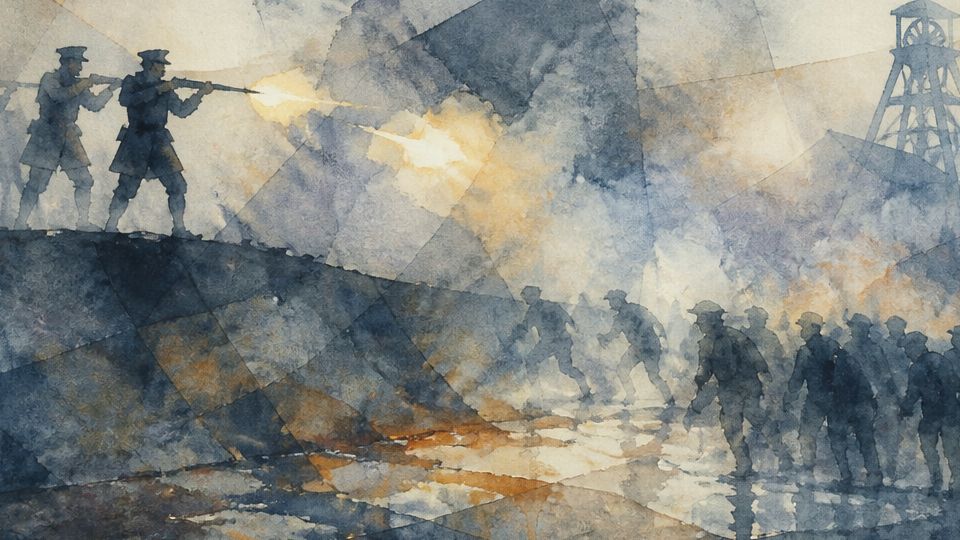
Then the guns went off. It happened with a snap that made mouths fall open. Soldiers fired into the gathering. Two miners were killed. Several were wounded. The village went from noisy to stunned in the space of a heartbeat. Later, over a cuppa that the officials insisted upon as though steam could wash away bullets, the town murmured. The coroner's inquest packed a room. Questions were asked that had the weight of an anvil but none of the comfort.
The aftermath stuck to Featherstone like coal dust. Men who had worked shoulder to shoulder suddenly stared at one another. Some said sling your hook and leave the county to its grief. Others were mardy for a long time. The papers called it a massacre. Local singers turned one of the dead into a champion of the cause. Magistrates looked gormless. Children bought spice and watched sparrows, the spuggy, hop about the square where only days before people had argued about pay. It was a grim, small theatre. A proper wrong turned public. I have seen rows end with bruises. This did not. It left a town that remembered the sound of rifles whenever a cart creaked past the pit mouth.