
Flint Jack and the Great Fake Stones
Category: Curious Crimes 27th July 2026
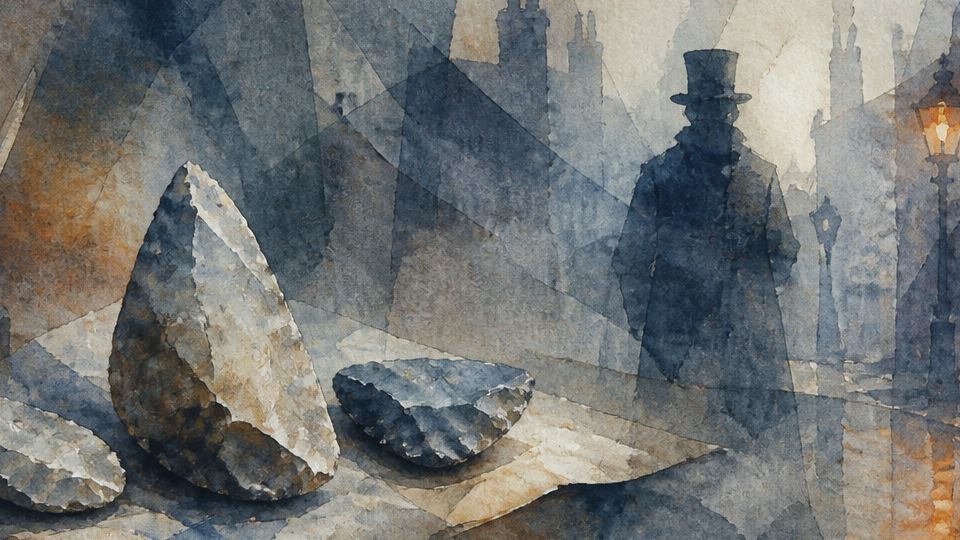
Picture a scruffy bloke who could chip a lump of rock into something that looked like it had survived glaciers, wars and bad taste in hat choices, and then sell it to a gentleman who nodded like he had just discovered religion. That bloke was Edward Simpson, known in mid nineteenth-century England as Flint Jack. He made stone tools that screamed prehistoric, and he sold them with the confidence of someone who knew his drip was unmatched.
He was amped about his own craft. Which, lowkey, makes the whole thing kind of brilliant. He could replicate arrowheads so clean they fooled collectors, museums and some very respectable antiquarians. People paid guap for objects that, to modern eyes, were bussin' craftsmanship. It was hustle, artistry, and a little trickery rolled into one grimy palm.
Simpson was arrested more than once for theft and deception. The courts treated him like a recurring weather event. Sometimes he confessed. Sometimes he spun yarns so theatrical a theatre manager would say bet, take a bow. His life read like a catalog of petites escroqueries, with dramatic vowel-heavy apologies and the odd colourful alias. If you like characters who flirt with catastrophe, he is bae of the genre.
The real joke is how everyone wanted to believe the past looked a certain way. That wish made the lies feel basic. Collectors wanted provenance and mystery, so when a neatly flaked flint arrived wrapped in a sensible tissue, they clapped back with buying. When the forgeries were exposed, it was big yikes for reputations. Museums quietly checked their cabinets. Some collectors were cancelled in the polite sense. Others just pretended nothing changed.
I always get a little thrilled by this story. Years ago, when I used to poke through antique shops like a detective on holiday, I found a chipped stone and felt that exact mix of awe and side eye. Flint Jack lived in that sweet tension between being a maker and being a con. The artifacts told a lie that looked like truth. It is a weirdly perfect human thing. Periodt.