
Dr Pritchard's Bitter Medicine
Category: Poisoners Shelf 22nd June 2026
Glasgow's respectable consulting rooms hid a mess that would have made a surgeon blanch. Edward William Pritchard was a proper doctor with diplomas, a tidy practice and the sort of bedside manner that got him invited for tea. Then people began to fall ill in a fashion no physician enjoyed. His wife grew weak. His mother in law keeled over. Neighbours who once admired his cuff links called him a barmpot when whispers turned to proof.
It was arsenic and antimony at play, disguised in doses meant to look like treatment. The evidence arrived slow and glacial, as Victorian forensics had to be tugged into life. Chemical tests produced results a chemist could gloat over. Jars and powders, handwriting that matched prescriptions, a pattern that made the local coroner more than a little mardy. Once the pattern held, the case snapped shut like a trap door.
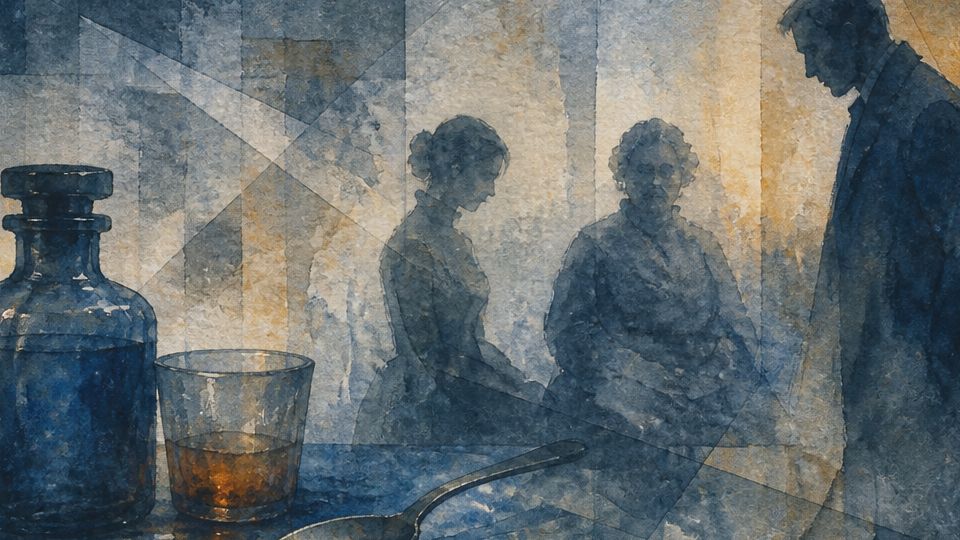
Pritchard, who had presented himself as a keeper of life, was accused of being a surgeon of death. The court papers read like a bad dinner party. Witnesses chelped on and on about doses, about visits, about furtive exchanges. Some neighbours went from wonder to gip with a speed that would have impressed any gossip. The prosecution painted a picture of calculated dosing. The defence painted a portrait of a man exhausted by disease and duty. The jury decided the portrait was uncomfortable enough to warrant a verdict of guilty.
He was sentenced and hanged in 1865. The public reaction split between a grim satisfaction and a kind of slow pity. Folks who had once praised his remedies called him a wazzock in private. Others, more generous or more jammy, insisted medicine often looks worse than it is. The law had its reckoning and the community had its gossip. In courtrooms and kitchens people learned a sharp lesson about trust.
Reading the records now, the whole affair reads like a brittle piece of theatre. The house, the bottles, the lies, the witnesses came together and exposed a man who had turned his art into something lethal. He went from doctor to cautionary tale. The only bright spot was that forensic chemistry found its feet and proved more than a barstool rumour. It is macabre, and a touch daft as a brush, but true.