
Dudley and the Cabin Boy Who Became Dinner
Category: River Rat Crimes 26th July 2026
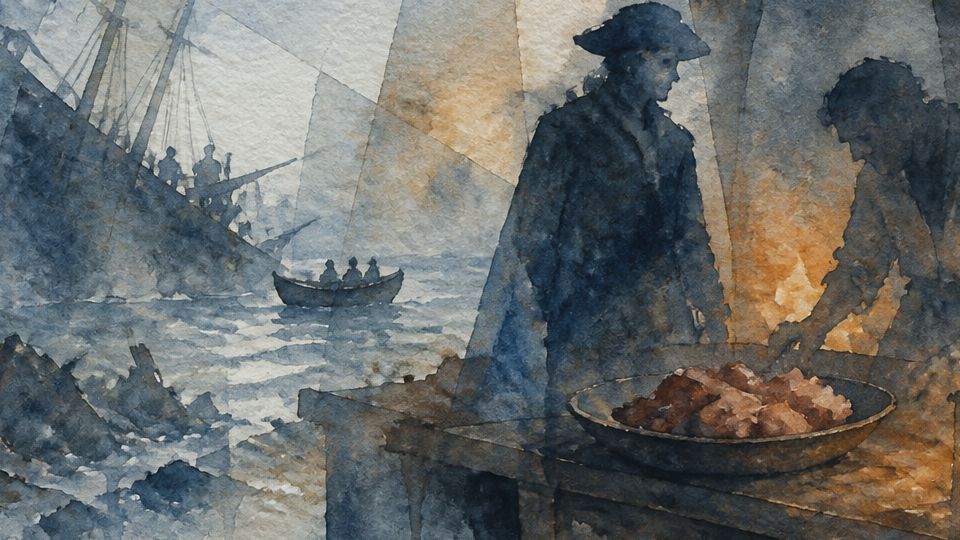
Aboard a tiny yacht named Mignonette, three grown men found themselves in a situation that would make even the hardest-hearted beggar blink. Eyup, the sea will do strange things to a person. The vessel foundered in 1884 and the quartet who clung to an overturned boat drifted for days with hardly a scrap of hope or biscuit left.
Richard Parker was the cabin boy. He was young, sick, and weaker than the others. Thomas Dudley, Edwin Stephens and a man named Brooks decided to take action that most folks would call monstrous. After Parker became unconscious the three killed him and ate parts of his body to survive. That sequence of choices treated public conscience like a ginnel on a wet night. It smelled appalling and looked even worse, black bright with the sort of human decisions you do not share over a cuppa.
The trial that followed was one for the books. At the Old Bailey the law had to decide whether desperate hunger could excuse killing another human. The jury returned a verdict of murder. The judge handed down a sentence that read like the ledger of a very stern accountant. Public outcry then met mercy. The death sentences were commuted and the men served short terms instead. Folk said a lot that week, and a fair few called the actors in this tale barmpots and wazzocks with equal relish.
What stayed with me was the legal result. The court made clear that necessity will not justify murder. That ruling shaped English criminal law and kept future judges from doing odd things in the name of survival. People argued at tea tables and docksides, calling the decision champion or heartless, depending on how greasy their conscience felt that morning. The case sits oddly in the memory. It reeks of sea spray and moral thunder, and it remains reight as rain in law classes when choppy hypotheticals appear.
If ever you want a bleak fairy tale about desperate men, this will do. It is not romantic. It is grim. Yet it is fettle for thinking about how thin line between necessity and crime can be. Gi'or, such stories trouble the mind long after the tide has taken the smell away.