
Crockford's Scandal: The Club That Ate Gentlemen
Category: Gambling Hells 25th June 2026
There was a spot in St James's where the rugs knew more about a man's luck than his priest ever would. William Crockford opened a members' gambling room in the 1820s that kept swelling until it swallowed fortunes and reputations, and by the time Queen Victoria had been on the throne a handful of years, people in frock coats were still trying to explain away missing banknotes. The club looked like a palace inside and it ran like a machine built to take your brass with a smile.
Now, hear me straight. Crockford was a proper calculator of advantage. He took in stakes, ran the tables, and supplied a certain sort of night's entertainment that London's toffs could not refuse. The game at the heart of all the bother was hazard and its cousins, those banked card games where the bank had the sly laugh built into the rules. Wealthy blokes arrived swaggering. Left poorer. Returned later anyway. It was madness. Or business.
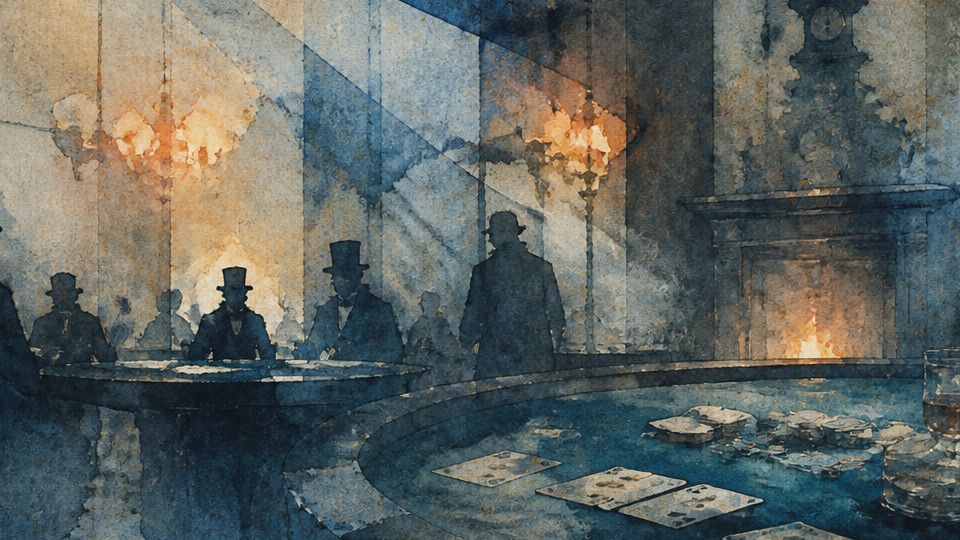
The trouble that bubbled into the courts was less about a single dramatic murder or a barroom brawl and more about the way the place operated, the disputes it caused, and the long list of men who accused each other of being short-changed. Laws about gaming in the mid-19th century were a tangle. Some complained of crooked dealers. Others blamed slippage in bookkeeping. The press loved it because it got to call out dukes and MPs like they were cheap pickpockets. For the public it read like theatre. For the men who lost their stakes, it read like a bill.
What made Crockford's properly dangerous to polite society was the brassneck of it all. He priced admission in a way that let only certain people in. That created a club atmosphere where debts were settled in whispers and threats, where a gentleman's word was currency until it wasn't. When arguments moved from drawing-room indignation to legal affidavits, judges had to stitch together the pages of a very English mess: wagering, credit, and private arrangements that the law half-understood and half-winked at.
I remember a tale an old fixer told me years ago about a man who left Crockford's lighter in the pocket and heavier in the vanity. He swore the dealer had palmed his fortune. The dealer swore he hadn't. They both swore with the kind of conviction that sounds best when you're wearing a waistcoat. Court transcripts from the time are peppered with that sort of theatrical grievance. It made for a lot of righteous clucking and a lot of quietly paid settlements.
In the end Crockford retired a kingpin. He made a fortune that let him vanish into the countryside and buy himself a ledger of silence. The club closed, reopened, changed hands. The curious thing is the lesson it left behind. Men in high places learned two things: one, that gambling could make you humble overnight. Two, that humiliation is easier to bear when you can still afford a new coat. If you want my two cents, and you don't, be careful where you lay your pride and your pocket. Ya heard.