
How Charles Peace Sold Stolen Silver and Got Too Clever
Category: Fences Parlour 27th June 2026
Tin boxes. That is where Charles Peace kept his treasures, tucked like guilty thumbtacks in the back of parlour drawers, mundane and grimy and perfectly unremarkable. He could lift a mantel clock while you were still counting your spoons, and he sold the lot to folk who pretended they were simply restoring family heirlooms.
Charles Peace was a long, wiry nuisance whose daylight face suggested a respectable journeyman and whose night face liked locksmiths' teeth. He operated across Yorkshire and into Manchester, and when he needed cash he took to the lanes of other men's houses. At some point a pattern emerged. Stolen goods flowed from the nick into a parlour, and from that parlour into the hands of a pawnbroker or a quiet customer who liked cheap silver and a good yarn.
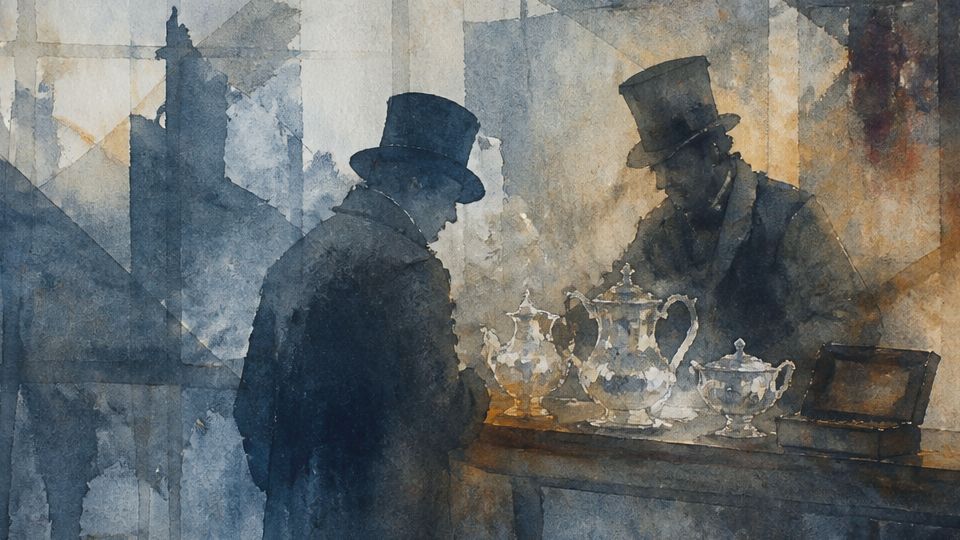
The receiver class in these stories are not leather-jacketed ruffians. They are genteel rogues who answer the door with a calm eye and a measured word. They offer a coalside chair, a boil of tea, a causual appraisal, then a few sovereigns. If you stood in their parlour you would think you were in the sitting room of someone slightly behind with the bills. If you were unlucky enough to have your property taken you would later be invited to 'call round and see if anything has turned up'.
In Peace's case the parlour was a neat interface between criminal energy and cash. He preferred to fence goods through middle-class channels when he could. That made the profit slimmer but the risk smaller. He trusted an honest-looking gent. He trusted a woman who could keep her mouth shut. And he trusted the parlour's tea-things to make everything look proper.
Police papers from the period show how investigators tracked coins, plated silver, and conversation. A single odd hallmark, a scratched maker's stamp, or a mismatched thread in a case could be the breadcrumb that led back to a name. Men like Peace made a habit of moving slowly across counties, which created a record you could stitch together if you were patient and had a nose for detail.
When Peace finally tangled with the law it had less to do with bravado and more to do with complacency. You can do your business in a parlour for months, cosy and reight as rain, and then a tram driver remembers an odd clock and a pawnbroker forgets to look at his receipt book. Small mistakes add up. They trip you over like a bit of rogue rope.
Peace was many things: a burglar, a showman, a thorn. He was also, for a while, a master of the parlour economy, trading stolen trinkets for coin and confidence. In the end he misjudged human habit. A quiet parlour will hold your secrets if everyone keeps them, but the moment someone gets the muley in their head you are washing your hands of every silver spoon you ever admired.