
Charles Keeble and the Night Snare
Category: Poachers Moon 4th August 2026
Some nights the countryside behaves like a gentleman. Other nights it takes its trousers off and behaves like a thief. One such moonlit evening in 1864, a gardener called Charles Keeble decided the latter. He slipped across the park of an English country house, set snares, and took a deer. That single act turned a quiet village into proper theatre for magistrates.
Keeble was no swaggering highwayman. He was a working man whose pockets were threadbare and whose conscience had developed a curious habit of bargaining. The game belonged to the squire. The law belonged to the county. Keeble belonged in the middle, holding a pair of oxford boots and a brutish hunger. He went out with wire, a lantern, and a plan that was daft but efficient.
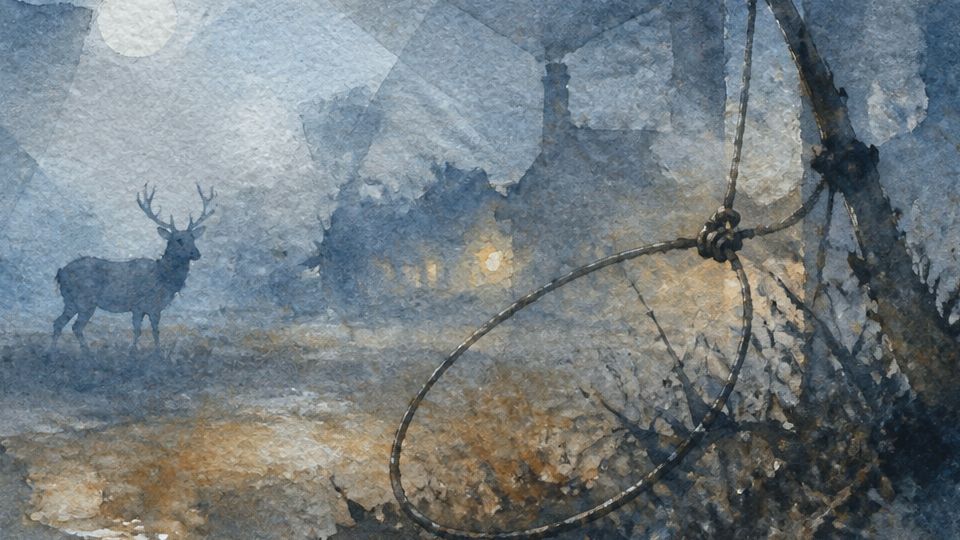
He was caught. Not in a fight worthy of a ballad, but by a warder and a neighbour who had a dog with a face like a small angry cloud. The papers enjoyed the absurdity. The local press called it sacrilege. The magistrates called it an offence against property. Keeble called it practical economics. All of them were chuffed. The hearing at the petty sessions read like a short, sharp play: the squire in his fustian, the keeper with hands like carpenters, Keeble with mud on his coat and guilt on his tongue.
The charge was simple. Taking deer from the park. The penalty reflected Victorian appetite for deterrence. He was fined and given hard labour as a lesson to any who fancied the lordly larder would serve them without consequence. A lot of people thought the sentence harsh; a lot of people thought the law should teach a lesson. Somewhere between those opinions live most country scandals.
What interests me is the theatre of it all. You had loyalty to the land, habitual poverty, and a legal system that treated landscapes as private ledgers. It is a subject that makes one want to shout at the sky, or at least at magistrates who wore judgement like a comfortable cap. Keeble left the hearing with his pockets thinner and his story larger. The squire slept easier. The keeper kept his boots cleaner. And the village spent its evenings talking about snares and what a man will do when his belly outvotes his morals.
There is a Yorkshire whisper in this tale. Folks would say Keeble was mucky as a pickaxe after his escapade. The dog that found him had the temperament of a mini tyrant. The keeper, bless him, called the whole business daft as a brush. And those who watched the trial left feeling a bit like spectators who had paid for a drama and then found the actors were their neighbours. It is the sort of small, vivid mess the Victorians did well, when a moon and a snare could make an ordinary night into proper domestic tragedy.