
When Captain Swing Signed The Envelope And The Thresher Went Missing
Category: Steam Sabotage 24th July 2026
Farmers woke to outraged fields. Machines lay broken like abandoned toys. The culprit's nom de guerre was Captain Swing. He sent letters which began with menace, not manners, and ended with demands that made magistrates look faintly ridiculous.
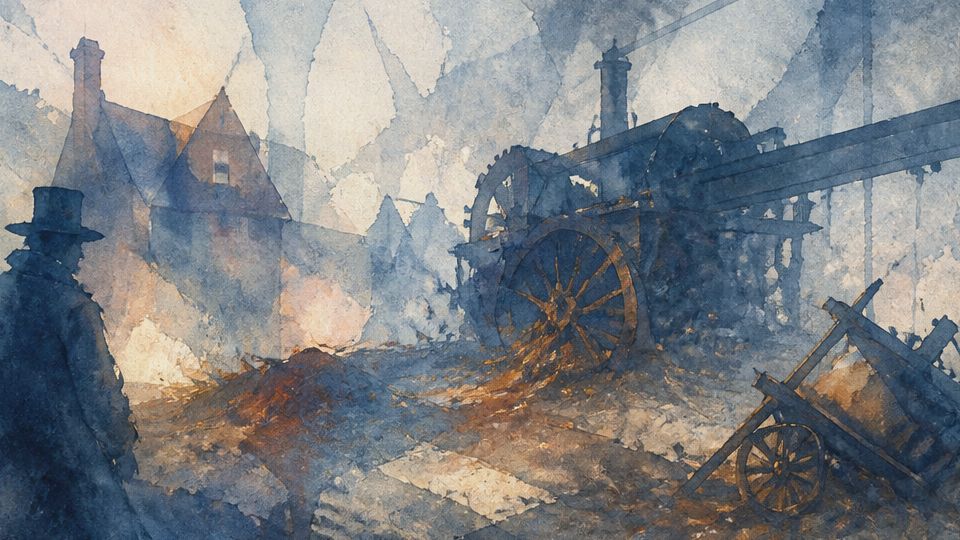
The hulking contraptions he targeted were the newfangled threshers hauled by portable engines and horses. Labourers feared unemployment. Landowners fretted about wheat and prestige. The machines had arrived like a present no one wanted. The riots across southern and eastern England in 1830 and 1831 turned those machines into theatrical victims.
Letters appeared pinned to doors and posted in lanes. The handwriting was formal. The message was brutal. The signatory promised violence unless rents were eased and wages improved. People who wrote such things were terribly eloquent in the language of threat. They were awfully good at making a magistrate consult his maps and his patience simultaneously.
Attackers smashed gears. They set boilers to an uncomfortable silence. They left symbolic piles of straw on doorsteps. The campaign was equal parts practical grievance and performative theatre. It was utterly political in a very domestic way. For many it was an insistence that machines must not become masters.
Courtrooms filled. Trials took place at assizes and at the Old Bailey. Punishments ranged across fines, imprisonment and transportation. Transportation was a dreadful sort of exile. It made whole families sigh in a way that felt quite final.
Contemporary commentators waxed glorious about order. Some papers wrote with stupendous indignation. Others sniffed at the peasants' audacity and called it preposterous. The truth sat somewhere between outrage and reason. The country had been changed by invention and the change had teeth.
Captain Swing remained a mask. Nobody could pin every letter on a single person. Historians now see the episodes as a network of local resentments made loud. The machines were mended. Harvests continued. The memory of those nights stayed on the lips of old folk for yonks.
As for the moral. There is one. When you invent a machine that eats work, expect a chorus, old chap. It may be messy. It may be theatrical. It will not be dull.