
When Baltimore Lost Its Temper Over The Trains
Category: Mob Fury 31st July 2026
Picture a city where the clack of wheels is the day's heartbeat and then, overnight, the whole thing goes quiet and smells wrong. In July 1877 the Great Railroad Strike rolled into Baltimore and the place changed from sleepy to absolute scenes in a heartbeat.
Workers had their pay cut and they'd had enough. Word spread like someone shouting about the last barm cake at breakfast. Men who'd never cadged a thing in their lives gathered. They pulled plugs from boilers, stopped engines, and smashed freight. Trains became targets. Passenger cars were wrecked and set alight. The rail companies' yards looked mingin'.
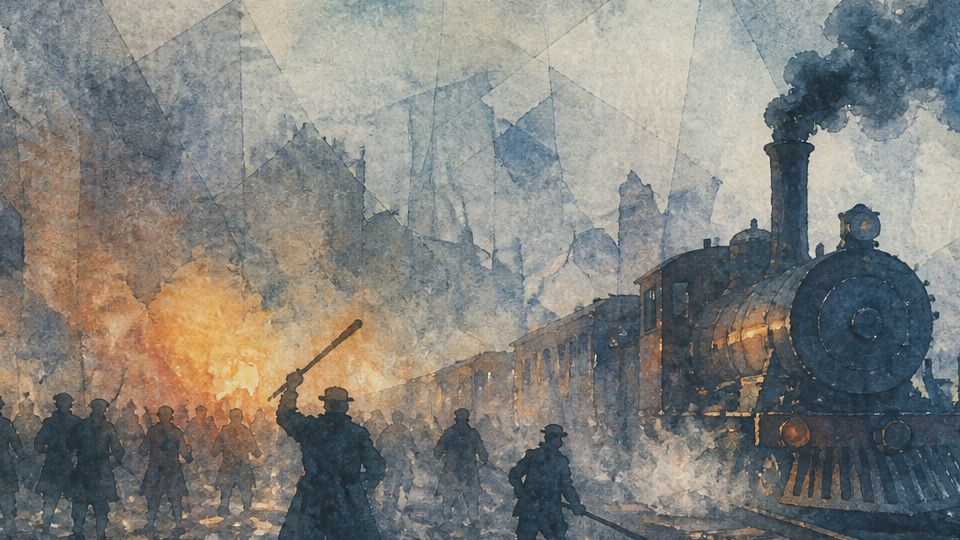
The police turned up. Then the dibble. Then soldiers. People clashed. Shots were fired. People died. It was ugly. They tried to keep the facts tidy in the papers. That lasted about five minutes. After that, the headlines treated every scrap like the theatre closing night and the city acted like it had been rehearsing for chaos all along.
There was anger at the bosses. There was fear of jobless weeks ahead. There was also a kind of communal fury that felt a bit like being on the lash and finding your house on fire when you stumble home. Men who were usually chuffed to keep their heads down suddenly wanted their share of whatever the world promised and weren't having it any other way.
I remember hearing about this back when us used to mooch through old papers for fun. The images stuck. Big men with soot on Newtons and tearful wives folding shirts into butties. The authorities tried to fettled things, and they brought in troops to clear lines and protect certain bits of iron and wood. It sort of worked. For a while.
Only afterwards did everyone attempt to make sense. You get the usual bobbins about law and order. You get speeches. You get arrests. But the memory is of a city that for two days decided it would not be taken for granted. Ave it, the papers said. I say give your 'ead a wobble and read the reports. They are a reminder that sometimes ordinary folk will be pushed so far they start behaving like a different species. It is grim. It is human. It is history.